Showing posts with label pop culture. Show all posts

Tuesday, October 8, 2013

Church: Blockbuster or Indie?

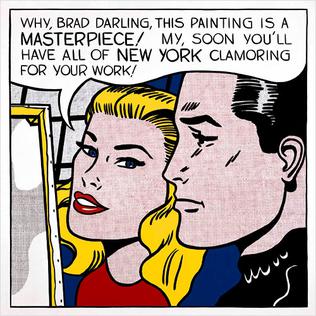
Masterpiece (1962) by Roy Lichtenstein
Hollywood serves up one blockbuster after another—usually a sequel to a previous blockbuster. A common element of these blockbusters is that you leave it in the theater. What I mean is, such movies might be a fun ride, but when it’s over, you get off and move on. This, for me, is a characteristic of bad art.

I might do better to say this is a characteristic of much pop art, which is not by definition bad, but is typically mass-producible and disposable. But the best art—the film or painting or story or music that really takes hold of you—is not so easily consumed and tossed aside. You finish the viewing/reading/listening experience but are still thinking about it, maybe days or weeks (or years) later.

A chief reason for this is that the artist/s didn’t do all the work for you. The art requires something of you. And so, as you keep working out what it all might mean, it becomes part of you. Subjective as it is, that—for me—is a sign of good art.


Blockbuster Church?
For a while now we have treated the church like a blockbuster. We have dumbed things down, blown things up, conformed things to proven templates, and marketed for mass consumption, all in a desperate attempt to produce a blockbuster. Tragically, many have succeeded.

But we have been given the makings of good art! We have been entrusted with “the news of the boundless riches of Christ, and to make everyone see what is the plan of the mystery hidden for ages in God who created all things, so that through the church the wisdom of God in its rich variety might now be made known to the rulers and authorities in the heavenly places” (Eph. 3:9ff). Whoa! Maybe read that again. THAT will stick with a person.

This “wisdom of God” and “plan of the mystery” are the cross-shaped reconciliation of all to God and to each other. The “eternal purpose” of the darkness of the Father’s depths has come to light in Christ, who now gives us access to the Father—gives all of us access. His is the name given to every family in heaven and on earth (v. 14). This is the DNA of the church: the Father’s love.

This is a dramatic invitation into the Trinity-life (vv. 14-21): As we bow our knees to our Father, we are strengthened in our depths with power (a word rooted in “dynamite, dynamism”) through his Spirit. And we are indwelt by Christ, who roots and grounds us in love.

We join all the saints—the Father’s family—in living in awe of his incomprehensible love, surpassing all knowledge, as we are filled with nothing less than “all the fullness of God” (v. 19). About this fullness, John Wesley noted in his Notes on the New Testament that we are filled “…with all [God’s] light, love, wisdom, holiness, power, and glory. A perfection far beyond bare freedom from sin.”

This is the life of the church…or it should be. This is the power—the explosive, dynamic presence of God—“at work within us, able to accomplish abundantly far more than all we can ask or imagine.” His glory comes “from the church and from Christ Jesus to all generations, forever and ever. Amen.” What a picture: The church connected to Christ Jesus, glorifying God to all generations, forever and ever. The possibilities are limited only by our desire just to churn out another blockbuster sequel, rather than do the real work of living into the grand expanse of God’s mystery.


Indie Church
I propose that, from this passage (Eph. 3), church leaders can draw something of a broader and deeper checklist, a checklist for “doing church” that really requires something of leaders and of the church--moving from blockbuster church to more of an art-house or indie way of thinking about church. So, here are some things to consider:

  • Is the church characterized as making known the wisdom of God in its rich variety?

  • Is the church carrying out God’s mysterious plan, revealed in Christ, to reconcile the world to God and to each other?

  • Does the church bear the Father’s DNA of love and unity?

  • Is the church experiencing the explosive, dynamic power of the Spirit?

  • Is the church rooted and grounded in Christ’s love?

  • Is the church filled with all the fullness of God (“…with all God’s light, love, wisdom, holiness, power, and glory. A perfection far beyond bare freedom from sin”)?

  • In short and in summary: Does the church glorify God as part of the glory that characterizes Christ Jesus?

What does each of these look like? Indeed, what do God’s wisdom, mystery, glory, power, love, etc., look like when active in the daily life of the church? This checklist is challenging, one might say abstract. In fact, we might disregard such concepts as too abstract. We disregard these concepts to our peril as leaders and to the gashing detriment of the church.

We must move beyond the leadership concepts from the business world and from get-big-fast consultants. We might find helpful instruction on management and marketing here, but nothing of mystery. Take the lessons on structure and organization and move on! And don’t move on to another business book—move on to the “wisdom of God” and “the plan of the mystery.”

It’s scary, I know. It takes creativity. It takes working it out in community. It takes faith…BIG faith. You can’t just watch another seminar online or take your staff to another leadership conference. You actually have to learn to seek God together. Then you have to figure out how to share the God you find…in tangible, meaningful, sometimes messy and meddlesome, ways.

It’s easier to let someone else do the work—a leadership guru, a marketing expert, a church-growth wizard. These folks have their place, but it is only as an early step or an occasional corrective on the way to something deeper. It is certainly not THE means or, God forbid, THE end.

No, it’s time to move past the mediocre-to-bad art we’ve made. It’s time to draw from God’s wisdom and mystery, from God’s fullness. It’s time to create something worthy of the sprawling glory of the Trinity. It’s time to be conformed, not to some generic church template or best-selling model, but to the DNA of God’s love and reconciliation and unity. It’s time for a new definition of church health and success, for a new checklist.

It will not look like a blockbuster. It will not look like a sequel. It will challenge, take hold, and stick with us. And that's what it comes to: Do we want church to become part of us? Or do we just want to fill the theater?
 

Tuesday, September 10, 2013

Don't Believe the Hype!

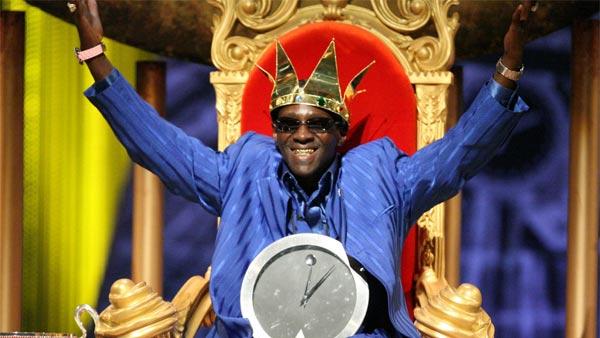
Flavor Flav is a hype man…the hype man. He is fun, crazy, entertaining, and even a bit talented. With his shades and grill and goofy hats and that giant clock around his neck, Flav is a standout in the pioneering hip-hop group Public Enemy. He was the comedic foil to Chuck D’s intense stage presence and politically charged raps, working the crowd and punctuating Chuck’s lyrics. He’s even an okay rapper; but a solo artist, Flav is not. No one goes to a show to watch Flav jump around and yell “Yyeaah, boy!” for two hours. Without “Fight the Power” and “Rebel Without a Pause” and “Welcome to the Terrordome,” Flavor Flav is just a classic fool.

Many in the church have become hype men (and women). We have taken on the role of getting people “pumped up” about God, pandering to the potential audience to get them in the doors and jumping up and down. And it works. I’m not talking about good Christian people who are excited about sharing their faith. I’m talking about pastors and church leaders who have drunk the Kool-aid, jettisoned the challenging—even off-putting—leading of God, and are becoming fools in the process. But I’m here to urge us, in the words of Public Enemy: “Don’t Believe the Hype!”

We are receiving a kingdom that cannot be shaken. How much energy do we in the church spend on a shakable kingdom, to the neglect of the unshakable kingdom (Heb. 12:18-29)? We obsess about buildings and productions and numbers (we call them “metrics” to sound businessy), comparing and competing with each other over nothing but hype. We ignore walking the path of God’s darkness, God’s light, and God’s union. But this is exactly the path that the church should be walking, the path into God’s mystery, into God’s revelation, and into life in the Trinity. All other paths are dead ends.

What if our efforts in the shakable kingdom—for surely we must give due attention to some externals—were all for the sake of the unshakable kingdom? How might the church do everything, not with thought and motives for attracting people, but all motivated by leading people into God’s mystery and God’s revelation and God’s abiding presence?

The domain of nominal Christians and anxious leaders—of shaky churches and shaky pastors—is, naturally, the shakable kingdom. Those who lead the church with a mind and heart for attracting people might do just that. How impressive! But last time I looked, “go into all the world and attract people” is not Christ’s commission. “But it’s evangelism,” they say. “We’re preaching the gospel to them.” To which I say, “What gospel are you preaching?”

The gospel of Jesus Christ has nothing to do with attracting people. I dare say Christ repelled far more people than he attracted. The gospel of Jesus Christ is about transforming people…to the glory of God alone. Can the externals be used to point to this Triune God—the shakable kingdom a pathway to the unshakable? Oh, they can and they should! But only that—all things pointing to this God and life in him. We must move on from the shakable kingdom as soon as possible. Yet the tendency of many is to move in there permanently.

The trend for more than a generation has been the opposite of moving from shakable to unshakable. We have used people’s hunger for God to be the means, and attracting them to our buildings and productions and swelling organization has become the end. (Read that again.) We say, “Well, we’re just attracting them to the church.” But is it really the church they’re coming to? No, we are attracting them to themselves.

Not enough people seem to be genuinely hungry for God, so we’ve started serving up platefuls of what more people are naturally hungry for: entertainment, affirmation, being part of a large organization that is better than the competition, superficial connection with others who are like us…a shakable kingdom.

Let’s be honest. There’s a line we must walk. We certainly want to offer our best to God—our architecture, our arts, our organization, the stewardship of externals. And we do want people to be part of the church…lots of people…every person! There’s nothing inherently holy about being aloof or small or old-fashioned or superficially ritualistic. On the contrary! There is no “right” set of externals that make up the unshakable kingdom.

It is only the mysterious, illuminating, abiding presence of God that makes up the unshakable kingdom. What that looks like on the outside is vast and varied. The only right externals are those that point to God and his kingdom. Any church must figure out what those things are, finding the harmony of orthodoxy, mission field, tradition, culture, etc. But they cannot do this by following trends.

We must stop turning the church into a Cosmo-girl, seeking superficial advice on the latest fashions and “how to attract a man” and “getting noticed in 7 easy steps.” The church and her leaders are unnecessarily anxious, hurried, shaky. But in the end, only the unshakable will remain.

God’s kingdom doesn’t need another twitchy hype-man. God’s kingdom needs devoted leaders who are fixed on the Trinity. God’s kingdom needs churches that exist only to follow God into darkness and light and union, where everything—from the building to the finances to the worship to the people—points in that direction. God’s kingdom needs God. The circus of the shakable kingdom might attract people and dazzle audiences and sell books. The fools might be entertaining. But don’t believe the hype…yyeaah, boy!

Friday, October 12, 2012

Random 5: Insanity Videos


#5 "Magic" by The Cars

#4 "Comfortably Numb" by Pink Floyd


#3 "Falling to Pieces" by Faith No More

#2 "Crazy" by Gnarls Barkley

#1 "Basket Case" by Green Day


Tuesday, September 18, 2012

Calling All Punks!


A rock n’ roll riddle:

Is a punk band still a punk band after it signs a record contract? Giving over artistic control to a big record company is not in keeping with punk’s anarchistic ethos—not very “punk.” The band maintains its key downwardly-mobile elements of a junkies-who-just-woke-up appearance, cacophonous no-rules music, and an overall public belligerence. But now they’re getting paid to maintain these elements. The things that made them authentically punk—they really were junkies who slept in their clothes; they didn’t know or care how to tune a guitar or write a song; their belligerence stemmed from being societal outcasts—those things are now part of a slickly marketed product at the mercy of corporate kiss-ups focused on their own wealth and power.

And with that, I present the church in 21st century America:

The church used to be rebellious and raw and underground. The church used to be very rock n’ roll...punk, even. Not anymore. Oh, there are certainly elements of the true spirit, wherever there’s the true Spirit. But more typically the church in America today is caught up in one cult of personality after another. It allows itself to be the pawn of political parties. It plays the harlot after wealth and empire, power and fame. The church today is a bloated poseur prancing about in a sequined jumpsuit and cape, so caught up in marketing and sales and indulging its worldly appetites that it has lost the fire and hunger that once fueled its original amp-kicking, thunderous passion. It’s time for the church to rebel.
...to be continued...

Friday, September 14, 2012

Jesus and Jimi Hendrix


Christ-people are rock n' roll. It isn’t the clothes or hairstyles or any cultural categories that make us rock n’ roll. If it were then we would just be poseurs, and poseurs are not rock n’ roll. It’s really not even the music—there are hymns and country songs and jazz and classical pieces that are more rock n’ roll than some "rock" songs. 

It’s the attitude behind these things that makes them, and us, rock n’ roll. More than anything it’s the Rock God in whose image we’re made that makes us rock n’ roll. There’s an in-your-face rebellion, a raucous hands-in-the air approach to life that just can’t abide blindly marching toward a cliff of worldly status quo. There’s a yell. It may be loud or quiet, confrontational or reserved, angry or joyful, but it crackles with the same electricity that had Jesus turning over tables and Jimi Hendrix burning and smashing his guitar.

Stay with me. I know Jesus and Jimi did not exactly have the same agenda. But we might be surprised. It is Jimi’s story (and can be seen on the original lyric sheet) that “Purple Haze” was originally titled “Purple Haze-Jesus Saves,” and was inspired by a nightmare out of which Jimi claims he was saved by his faith in Jesus. And Jesus and Jimi were about love, though their ideas of that concept had some marked differences. But where Jesus and Jimi really line up is in upsetting the establishment.

In the act of setting his guitar on fire and smashing it to bits at the 1967 Monterey Pop Festival--his first major American appearance--Jimi Hendrix was taking the primary instrument of rock n’ roll and utterly dismantling it, thereby challenging all it stood for. “You think rock n’ roll is this guitar, this music?” he was saying. “No! This is rock n’ roll!” Smash! (Fitting that he did this while playing “Wild Thing.”) He even introduced the performance by saying, "I'm gonna sacrifice something I love."

So Jesus strolls into the Jewish Temple, the faintly-beating, adulterous heart of Jewish life and identity, and he fulfills ancient prophecy—God returning to his Temple, albeit unrecognized. He sees the corruption and fruitlessness of his people and he turns the place on its head by turning over the tables of the thieves who were selling sacrificial animals at criminally inflated prices. “You think being God’s people is this empty ritual, this hypocrisy?” he was saying. “No! This is what it means to be God’s people!” Smash! He utterly dismantles the primary “instrument” of sacrificial worship. Then he becomes the sacrifice. That’s rock n’ roll.


Friday, September 7, 2012

Rebel Yell


It starts with a yell. Crying from the depths of oppression. Celebrating the joy of liberation. Wailing in the dark night of the soul. Writhing in the throes of passion. Inciting revolution. Indicting institutions. Inviting absolution. Whatever the situation, there’s a yell.

It’s Jesus yelling about the religious hypocrites and his own forsakenness, calling for the thirsty sinners to come and for the thieves in the Temple to go.

It’s The Who’s Roger Daltrey yelling about the teenage wasteland and not getting fooled again or James Brown yelling about feeling good.

It’s the psalmist yelling about taking the enemy’s infants and dashing them against the rocks and Metallica’s James Hetfield yelling about being imprisoned by darkness and horror.

It’s the lover of Song of Songs yelling for his love to come away with him and Bruce Springsteen yelling baby, we were born to run.

It’s King David and Bono and all of humanity yelling, “How long?!”

Often there are no words—just a sound from the deepest waters of the soul’s well. It’s an expression of what it is to be a reasonable, self-controlled human experiencing more life than can be understood or dismissed.

Is it coming from the Bible or from my speakers? “Glory!” “Hey!” “Hallelujah!” “Help!” “Rock!” “Roll!” “Wop-bop-a-loo-bop, a-lop bam boom!” It’s a yell and it’s rock n’ roll.


Monday, December 21, 2009

The Noughties: Best of the Decade 2000-2009

Okay. As of today here is my "Best/Top" list for the Noughties--the decade of 2000-2009. There's 7 of each because it's more than 5 and less than 10, as well as being biblical and all, and they're not in a particular order. I didn't put comments on each one because these aren't reviews, and all really should be experienced more than talked about. Some criteria include media I actually consumed (never got into Lost or saw City of God, for example, so such things were off the table), cultural relevance (so none of my especially weird, obscure stuff) and, of course, artistic merit (sorry Britney Spears, though "Toxic" was pretty brilliant). I especially tried to include stuff that, looking back, had strong ties to the decade that was, whether starting trends or voicing a zeitgeist. Check it out, laud or bash away, expand your horizons, add your questions, comments, or snide remarks. And Happy 2010!

Best Albums:

All That You Can't Leave Behind (U2)--After a decade (90s) ending with boy bands and pop-tarts, U2 came along and saved rock n' roll.


O Brother, Where Art Thou? Soundtrack (Various)--Gave attention to the genius of T-Bone Burnett and opened a huge window for a revival of roots music, seen in the new folk and bluegrass-influenced bands.


Kid A (Radiohead)


Elephant (The White Stripes)


A Rush of Blood to the Head (Coldplay)--The Coldplay people were remembering when they were lauding Viva la Vida. Had they kept in this direction, it wouldn't have become fashionable to hate Coldplay.


Yankee Hotel Foxtrot (Wilco)


The Rising (Bruce Springsteen)--What we needed after 9/11. What we still need.


Best Songs:

"Hey Ya!" (Outkast)--Irresistible dance/pop/hip-hop/funk in the tradition of Pariliament/Funkadelic. You know you loved to "shake it...shake-sh-shake it like a Polaroid picture"!


"Clocks" (Coldplay)--The song that was on every TV commercial and was copied by so many other bands...and for good reason.


"American Idiot" (Green Day)


"Paper Planes" (M.I.A.)--Stirred up all kinds of trouble in a kicky, pop way.


"Crazy" (Gnarls Barkley)--Same Funkadelic pool as Outkast--much more sinister, haunting, and melodic.


"The Rising" (Bruce Springsteen)


"Beautiful Day" (U2)--Because there were few better comments on the times than the images of tuna fleets, Bedouin fires, and oil fields juxtaposed with the bird with a leaf in her mouth and the post-flood rainbow.


Best Movies:

The Lord of the Rings (trilogy)


No Country for Old Men


Memento--Brilliant example of the trend of non-linear storytelling (see also Mulholland Drive, Adaptation), with a gripping, classic "amnesia" action plot to boot (a la North by Northwest).


Juno--Heralding a fresh era of fresh indie filmmaking, movies like this one and Little Miss Sunshine are examples that sharp writing in the hands of strong actors and directors all telling an honest story can still result in classic films. And a superb soundtrack doesn't hurt, either.


Man on Wire


Knocked Up--The best (so far) of the Apatow company and their heartwarming, offensive, immoral morality plays.


Kill Bill Vols. 1 & 2--If there's any doubt that Tarantino is the best of his generation, these perfections of the spaghetti western/samurai genre should put them to rest. Just give the man a genre and he'll master it.


Best TV:

The Office


Curb Your Enthusiasm--You only thought Seinfeld was over. It just moved to HBO and got better!


The Sopranos


The Daily Show with John Stewart--What sharper commentary can there be on our times than the fact that truth in media is found on a "fake" news show.


The West Wing


Arrested Development--Because I couldn't quite get The Royal Tennenbaums on my best movies list. This show was ahead of its time and would likely be a hit if debuting today.


Battlestar Galactica


Best Books:

The Tipping Point (Malcolm Gladwell)


Fast Food Nation (Eric Schlosser)


Consider the Lobster and Other Essays (David Foster Wallace)--A writer's-writer, including depression and suicide, Wallace's use of our native tongue is like discovering a strange city under the floorboards of your kitchen.


Simply Christian (N.T. Wright)--Simultaneously carrying the mantle of C.S. Lewis's Mere Christianity apologetics, while heading in the very different direction of Wright's brilliant-yet-practical presentation of the faith.


Fortress of Solitude (Jonathan Lethem)--Though separated by so many elements, I experienced and witnessed so much of this Brooklyn story in small-town Texas. This is a mark of powerful story-telling.


The Corrections (Jonathan Franzen)


The Road (Cormac McCarthy)--Social commentary, a father-son parable, and running from cannibals all in one alarmingly lean novel.


News Stories:

Google, Facebook, and Youtube

Hurricane Katrina

Election 2000/Supreme Court Elects Bush President

Iraq/Afghanistan Wars

Human Genome Mapped

U.S. Elects First African-American President

September 11, 2001


Honorable Mentions: The Colbert Report, Red Sox Win World Series, Mulholland Drive, "Hurt" (Johnny Cash's cover), Pope John Paul II Dies/Benedict XVI Ascends, "Stan" (Eminem), 30 Rock, There Will Be Blood, "Single Ladies" (Beyonce), Family Guy, High Fidelity (movie), China: Sleeping Giant Awakes, Freakonomics (Levitt, Dubner), Indian Ocean Tsunami 2004, God's Politics (Jim Wallis), The Dark Knight, Good Night and Good Luck


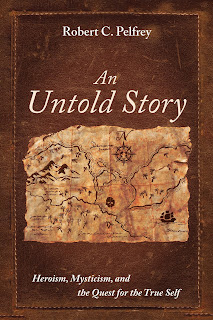
NEW BOOK--An Untold Story: Heroism, Mysticism, and the Quest for the True Self

"There is no greater agony than bearing an untold story inside you." ~ Maya Angelou, I Know Why the Caged Bird Sings About the Boo...