Showing posts with label inspiration. Show all posts

Tuesday, September 26, 2017

Dis-Orientation: The Invisible is Real

The audio of this sermon can be heard HERE.


“Ask… search… knock…” Such encouraging words! It will be given to you, you will find, the door will be opened to you. These are simple yet astounding promises from Jesus. In some ways it summarizes the Incarnation and Jesus’ ministry: Turn to God he'll be there. Come to God—no matter who you are—and God will take you in. Extraordinary! And disorienting! Seek the invisible God and you'll find? How can anyone seek the invisible?
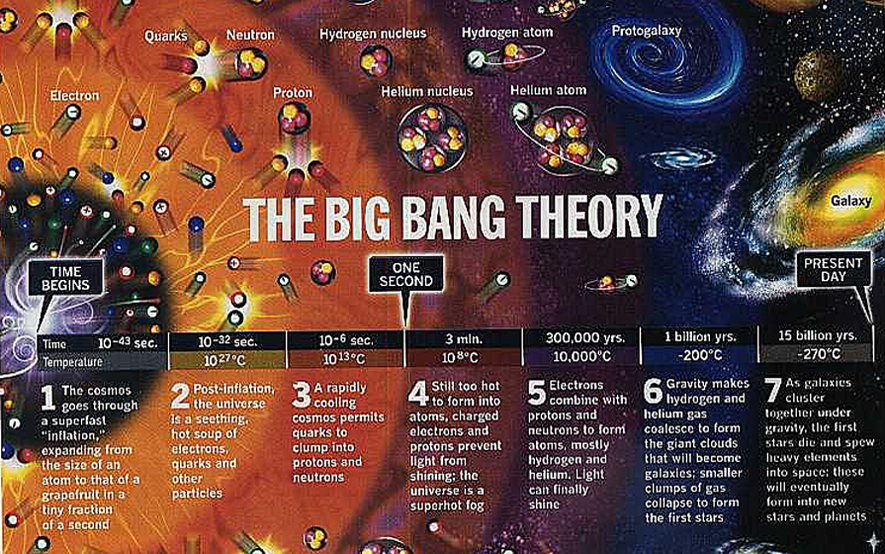
The invisible God works from God's invisible heavenly realm to bring his rule and power to bear in our visible lives in the visible world. In the beginning, our whole universe was in a hot, dense state—all the matter and energy in the known universe contained in a volume a trillionth the size of a period on a typed page. One million trillion trillion trillionths of a second after that appearance the universe began to expand unimaginably quickly. One million trillion trillion trillionths of a second before that beginning, God was there…willing it to be. As the writer of Hebrews wrote, “what is seen was made from what is unseen” (11:3). Or as Jesus put it, “your Father in heaven.” The Father of all is simultaneously within and outside all things, offering all we need for a good life.

I must confess that I don’t always trust God’s goodness, and I'm probably not alone. Jesus seems to know this mistrust when he explains, “If you who are evil know how to give good gifts to your children, how much more will your Father in heaven give good things to those who ask him!” (Matt 7:11). Again, Jesus is asking us: “Do you really believe God is good…really? If you do, then you will ask, search, and knock. You will leave behind the world’s empty promises and give your whole life to seek the good things of God. And God will always deliver!” 
“It would seem that our Lord finds our desires not too strong, but too weak. We are half-hearted creatures, fooling about with drink and sex and ambition when infinite joy is offered us, like an ignorant child who wants to go on making mud pies in a slum because he cannot imagine what is meant by the offer of a holiday at the sea. We are far too easily pleased.”  -CS Lewis
We are deceived by the visible world, spending our lives chasing after material wealth, physical pleasures and ease, power and the approval of people. Why? What is the better source of innovation and advancement and rallying people to work together for good: seeking material wealth and physical payoffs, or invisible things like hope, compassion, creativity, love, and faith? These are good things God promises us. You’ll have the material things you need. The question is, will they have you? Be honest: Do you think more people get to the end of life and regret the visible things they don’t have? Or do you think they regret the invisible things they missed out on—more love, more friendship, more compassion, more joy and happiness? And if someone says, “I wish I’d had a nicer car and a bigger house,” do you think they’re worth listening to anyway? 

But there's more...

Julian of Norwich (1342 - c.1416)
Living in England in the 14th century, Julian of Norwich experienced the terrible losses and suffering of the Black Plague, possibly even losing her own husband and children. When she was thirty, Julian herself fell ill and lay in a coma. During this time she had a ten-hour encounter with Jesus. Julian asked Jesus about all the suffering she and her loved ones and world were experiencing. Jesus repeatedly told Julian of his love for her and for the world, showing her very detailed images. The first image was Jesus suffering for the world on the cross. Another image was Jesus holding a hazelnut in his hand, saying that his life and love surround each of us like his hand surrounds the nut.

At one point, Jesus tells Julian a story: 

There was an assistant who worked for a remarkable boss. The assistant loved and admired his boss, following him everywhere and excitedly doing what he asked. One day, the assistant was walking along and fell in a deep, dark hole. Lying curled up in the hole, the assistant began to berate himself: “You foolish person,” he told himself. “That’s just like you to fall in a hole. Now you’ll probably die here, all alone in the dark. You’re so stupid!” While the assistant lay there in hopelessness and negativity, he was completely unaware that his loving boss was kneeling on the edge of the hole reaching down to help him out.
There is good invisible and there is bad invisible. In addition to the visible temptations and troubles of the world, we can get so distracted by the negative and harmful invisible thoughts and attitudes we hold, that we become completely unaware of our loving Lord reaching out to us to lead us into his light and life and love.

We must ask, seek, and knock for these good things, these God things. Seek and you'll find something truly amazing: Jesus leaning in, offering you the best of all invisible things—life, love, and God himself. And then you get the shocking, scandalous privilege of making those invisible things visible in the world.

Tuesday, August 9, 2016

Believing in Magic

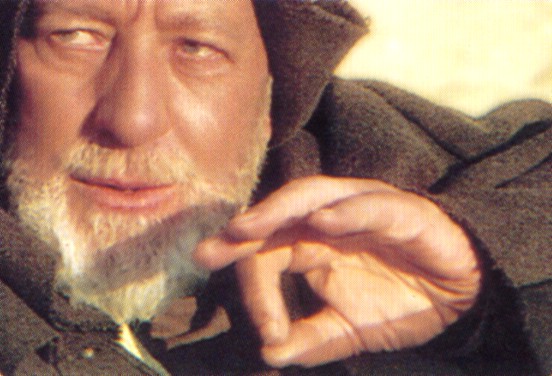
The magic is gone. I feel like there isn’t magic in the world anymore. Like I know all the tricks, so now I see the wires and what’s up the magician’s sleeve. It’s like in the movie Boyhood, when young Mason realizes there aren’t really elves and fairies in the world. His dad’s attempt to soften the blow by talking about how magical a blue whale is doesn’t really comfort the disillusioned boy. So it is that the “magic” of reality doesn’t often impress me either. It’s worse than just losing the magic, which I suppose happened a long time ago. I’ve lost my wonder too.

At some point I put my head down and never looked up again. I notice the beauty of things, of nature. I’m moved by people’s stories and lives. But the magic, the sense of wonder, the mystery of hidden things and the invisible power of heaven breaking into earth, the limitless possibilities of the unknown—these have drifted off like a dream that seemed so vivid yet can’t be recalled upon waking. I need a miracle.

I worked so hard to grow up, to mature in my faith. I told myself (and preached to others) that a mature disciple doesn’t need signs and wonders, that that’s what faith entails—carrying on in the absence of such things. And I’m sure there’s important truth in that. But somewhere along the way I became some form of Deist, a naturalist and materialist whose God is very near but is content to work through nature taking its course. Maybe this is all correct and I just have to accept growing up.

Or maybe to hell with that. Maybe I need to grow young. Maybe, as Chesterton said, “we have sinned and grown old, and our Father is younger than we.” Maybe I need to chase the magic and regain the wonder. Maybe it isn’t God who stopped being interesting—maybe it’s me (not maybe). Maybe it’s better to spend a life believing in magic that might not be real, wondering at mystery that possibly isn’t so mysterious, than to settle into the boredom of a small, figured-out existence. And maybe the magic is more real and the mystery more wonderful than I’d ever imagined. That’s the chance I’m going to take.

"All things are full of wonder. But we never think to wonder at them because we have, by habit, become dull to the consideration of them."  
-Gregory the Great, 6th c.


Tuesday, August 2, 2016

The Promises God Keeps

“…Abraham grew strong in his faith as he gave glory to God, being fully convinced that God was able to do what he had promised” (Romans 4:20-21).

While inspiring our faith, this passage also exposes a couple of issues at the heart of our doubts and struggles. The first is somewhat obvious: We are not convinced God is able to do what God has promised. But the second issue is subtler: We don’t know what it is God has promised. It’s hard to believe God—or anyone—keeps his promises when we don’t know what the promises are.

In Abraham’s case it was Sarah’s miraculous conception and the birth of Isaac, the “son of promise.” Abraham believed this promise of God through years of waiting and serious doubting, and despite the odds and circumstances. But much larger even than Isaac, God’s promise was the covenantal relationship. Abraham had to believe God’s promise to be God—to be his God and the God of those he loved, from generation to generation.

I don’t know how much or often God makes specific promises to us on the order of miraculous conceptions. Rarely, I suppose. He does promise in Jesus to care for us and to provide for our needs. And we see this in the natural world (why must it be considered any less miraculous?) as, every moment, babies are conceived and bread comes forth from the earth and water is transformed into the fruit of the vine. But the daily miracle of our existence in Christ is God’s promise to be “with you always.” And he seals that promise—through death, resurrection, and ascension—with the indwelling of the Holy Spirit. This is the angle from which we are to approach all those more specific promises we hope will come to pass.

The life we are living, with its choices and hopes and disappointments and dreams-come-true, is a daily fulfillment of God’s promise to be with us, to be our God and the God of those we love, from generation to generation. This is the faith in which we are to grow strong, to give glory, and to live fully convinced that God is able to keep his most important promise—that he will always be with us and be our God. We apply that promise to the “lesser” promises we hope for. What does it mean for God to be God over this particular need, for God to be with me in that particular situation? But the promise of God to be God is enough.

Tuesday, February 16, 2016

Why God Throws a Party

In his book The Return of the Prodigal Son, Henri Nouwen makes this observation about Jesus’ parables in Luke 10, featuring the shepherd looking for his lost sheep, the woman looking for her lost coin, and the father eagerly awaiting the return of his lost son—each of whom represents God: “God rejoices. Not because the problems of the world have been solved, not because all human pain and suffering have come to an end, nor because thousands of people have been converted and are now praising him for his goodness. No, God rejoices because one of his children who was lost has been found. What I am called to is to enter into that joy.”

We miss that joy, says Nouwen, because it is small, hidden, and inconspicuous. The pressure is constant, and only stronger since Nouwen wrote this in the 1990s, to only find joy in the grand, impressive, and showy. Even in matters of faith, it is easy to see God and find joy only in big, miraculous gestures of healing, conversion, worship, etc. But the understanding of joy I’ve come to at least—that joy is delight and deep contentment in the world and in ourselves because God is present in both—would say otherwise.

It is God’s presence that brings joy, not the presence of any dazzling spectacle. Sure, the spectacular might point to God’s presence. But so can the unspectacular, the quiet, the simple—sometimes even more so, for those who have eyes to see and ears to hear. And that’s what it comes to: attentiveness.

If joy depends on rejoicing in God’s presence—in the everyday as much as in the once-in-a-lifetime—then we must learn to recognize God’s presence. Where might God be working in a life, in the world, in creation, in an “average” day, in the deep quiet of my own soul? May we find ourselves ever more in the habit of pausing to observe and to rejoice in moments of small, hidden, quiet joy…each of which, for God, is likely cause for a party!

Tuesday, January 26, 2016

Chosen Instrument

Jimi Hendrix, Monterey Pop Festival, 1967
Photo by Jim Marshall

Recently I was conversing with Jesus about the calling of Saul (Paul) of Tarsus. After Paul’s conversion experience on the Damascus Road, Jesus instructs an understandably cautious Ananias, “Go! This man is my chosen instrument to proclaim my name to the Gentiles…” (Acts 9:15). I confessed to Jesus that I’d like to be his “chosen instrument” for something (despite the fact that Jesus’ next line about Paul is, “I will show him how much he must suffer for my name”!). I wondered about the nature of a calling. Are we indeed called to something specific? And, if so, can we resist and/or miss our calling? But mostly I just wanted to be Jesus' chosen instrument for something.

After sitting in silence with Jesus, his response emerged: “You are my chosen instrument to be Robert.”

So the answer is yes, we are called to something specific. And yes, we can resist and miss our calling. When we don’t become ourselves—through pretending, numbing ourselves, aimlessly wandering, ignoring God’s leading, etc.—we are missing our calling…the calling to be ourselves fully alive. You are Jesus’ chosen instrument to be you. What does that look like, you fully alive? It’s a unique and powerful calling…one that no one else on earth can answer.

Monday, October 19, 2015

With Jesus By the Sea

“That same day Jesus went out of the house and sat beside the sea.”
-Matthew 13:1

There’s something about this picture that is striking. It is the Creator of the universe, the one who made the sea, sitting beside it, perhaps contemplating its beauty as he seeks a moment of silent retreat.

But also, it’s just so ordinary. I have walked out of a house (or hotel) and sat beside the sea. I have sat and pondered the power, majesty, and mystery of the universe and its Lord and Creator, illustrated in the power, majesty, and mystery of the sea. I have retreated to the seaside seeking solitude and silence.

I am in awe of how profound Jesus is, so exalted as the Creator of all—such power, majesty, and mystery embodied in this most holy one. I am in awe that he gathers crowds (usually unsolicited) and takes time to teach them the mysteries of the revelation of God and God’s kingdom, doing so in parables that they can understand and often using images drawn from his own creation.

And I am in awe that he humbled himself to become so like me, contemplating his creation, seeking solitude and silence, himself in awe of power, majesty, and mystery. And so, because he is so exalted and yet so humble, we can sit together beside the sea...even if sometimes the sea is only my soul.

NEW BOOK--An Untold Story: Heroism, Mysticism, and the Quest for the True Self

"There is no greater agony than bearing an untold story inside you." ~ Maya Angelou, I Know Why the Caged Bird Sings About the Boo...