Showing posts with label life. Show all posts

Tuesday, August 9, 2016

Believing in Magic

The magic is gone. I feel like there isn’t magic in the world anymore. Like I know all the tricks, so now I see the wires and what’s up the magician’s sleeve. It’s like in the movie Boyhood, when young Mason realizes there aren’t really elves and fairies in the world. His dad’s attempt to soften the blow by talking about how magical a blue whale is doesn’t really comfort the disillusioned boy. So it is that the “magic” of reality doesn’t often impress me either. It’s worse than just losing the magic, which I suppose happened a long time ago. I’ve lost my wonder too.

At some point I put my head down and never looked up again. I notice the beauty of things, of nature. I’m moved by people’s stories and lives. But the magic, the sense of wonder, the mystery of hidden things and the invisible power of heaven breaking into earth, the limitless possibilities of the unknown—these have drifted off like a dream that seemed so vivid yet can’t be recalled upon waking. I need a miracle.

I worked so hard to grow up, to mature in my faith. I told myself (and preached to others) that a mature disciple doesn’t need signs and wonders, that that’s what faith entails—carrying on in the absence of such things. And I’m sure there’s important truth in that. But somewhere along the way I became some form of Deist, a naturalist and materialist whose God is very near but is content to work through nature taking its course. Maybe this is all correct and I just have to accept growing up.

Or maybe to hell with that. Maybe I need to grow young. Maybe, as Chesterton said, “we have sinned and grown old, and our Father is younger than we.” Maybe I need to chase the magic and regain the wonder. Maybe it isn’t God who stopped being interesting—maybe it’s me (not maybe). Maybe it’s better to spend a life believing in magic that might not be real, wondering at mystery that possibly isn’t so mysterious, than to settle into the boredom of a small, figured-out existence. And maybe the magic is more real and the mystery more wonderful than I’d ever imagined. That’s the chance I’m going to take.

"All things are full of wonder. But we never think to wonder at them because we have, by habit, become dull to the consideration of them."  
-Gregory the Great, 6th c.


Tuesday, April 29, 2014

Make Someone Happy...Yeah, Good Luck With That


Make someone happy
Make just one someone happy
And you’ll be happy too

Despite Jimmy Durante’s classic words, we can’t really “make someone happy.” That’s too much pressure to put on anyone. We might do or say things that result in someone else’s passing moments of happiness, and vice versa. But for many, this is much bigger. We fall into the romantic notion that if we “make just one someone happy,” then we’ll “be happy too.” It makes for a nice song about investing ourselves in a significant other. But the reality is a trap we too easily fall into.

I can’t be responsible for the happiness of my wife or child, my neighbors or friends or coworkers, and certainly not (as a pastor) an entire congregation. Their happiness is up to them. And I mustn't depend on them for my happiness. Selfish as it seems, I need to be concerned with my own happiness and let them be concerned with theirs. The lyrics might more truly say, “Make yourself happy, and others might be happy too…maybe.” Not such a good song I guess, but more accurate.

Now this is a slippery slope. The truth is, until my happiness includes loving others redemptively, putting their good first even at my own personal cost, then much of it is a wash. Selfish happiness is no real or lasting happiness. But putting others first and making them happy are two very different propositions.

It comes down to obedience, faithfulness. If our decisions and motives and actions are held up as responsible for other people’s happiness, as is so often the case, then it’s all a fickle mess, because we are all just people subject to moods and mixed motives. And the corollary is true as well – moods and whims are also responsible for unhappiness. If others’ happiness depends on me, and mine on them, then we’re all in trouble. People are flaky.

Come to think of it, so am I. So even if I live just to make myself happy, I’m still after a wildly moving target. Happiness has to be realigned with faithfulness. We have to learn the subtle but abiding joy of living faithfully, following Jesus and participating in the life of the Triune God. Then my happiness is God’s happiness – a fixed, eternal target. This is the still center of eternal life and true happiness…and you’ll be happy too.
  

Monday, September 30, 2013

I Own You

There comes that moment when the villain says those chilling words. Characters have either fallen under the spell of a charismatic tyrant or simply been enslaved by a horrific evil-doer. It has taken place gradually through a slow, unwitting letting go of control, or freedom has been violently stolen away. Whatever the case, there comes that moment of shocking revelation when what the characters have suspected is true is actually uttered out loud by the villain: I own you.

Whether in fiction or real life, the realization that one has given away or lost freedom and control is indeed chilling. Tragically, though, this happens to us regularly. We give away slices of freedom and chunks of control with each mindless consumption, with the ebbing away of our time, with relentless indulgences and untreated addictions, with every comparison of our life to that of another. Every day we give away ownership of our lives to ideas and things and actions and people who have no business with such control. And this determines our becoming as we slouch toward monstrosity. But there is only one to whom we truly belong. Yet that belonging is not the source of enslavement but freedom, not “I own you” but “You are mine." There’s a huge, eternal difference.

Do not fear, for I have redeemed you; I have called you by name; you are mine.
--Isaiah 43:1

“You are mine.” This is God’s assertion many times in Scripture. In fact, it could be considered an overarching theme. A golden thread running through the fabric of God’s revelation is that we are his—his creation, his image, his chosen ones, his people, his children, his redeemed, his dwelling place, his beloved. The back-and-forth of our story, faithfulness pushing and being pushed by unfaithfulness, is largely the result of the unwillingness to commit, or sometimes the inability to see, that we are God’s. Two aspects of this revelation are key to having it take hold of us and free us:

1) We belong to God and, thus, our lives are as secure as the life of God. No one can take your life from you any more than they can take away God’s life, kill God. No professional failure or shortcoming, no personal disappointments or rejections, no worldly circumstances, not even death, can take away your life. You will go on forever.

2) We belong to God and, thus, to no one and nothing else. We preach and speak against divided loyalties, against distractions that lead us away from God, against living for anything other than God and God’s will. But let’s not be naïve: living such a fixed and devoted life is fraught with difficulty. The temptation is always present—sometimes overwhelmingly so—to seek the approval of others, to define success and failure externally in accord with others’ values and expectations, to give over control to something material or numbing. This must no longer be. For you will belong to God—no other idea or expectation or agenda or person—forever. And God is Love, characterized by grace and mercy. Even his judgment is for setting things right, for setting you right…because you’re his.

“You are mine." God doesn't own you. No one owns you (unless you let them). You and God are one--that's very different. No one can pull you from God’s caring, guiding embrace. No one can give you more or less worth. You will accomplish God’s will only by becoming who God is making you to be. Which is to say, by focusing your life on becoming this child of God’s, you will accomplish his plan for you. This is God’s will, the becoming. There is nothing else. Lives touched, missed opportunities, disciples made, stumbles, work produced, failures, dying—all part of the becoming. First things first. And first, “You are mine…and I am the First and the Last.”

Monday, September 23, 2013

Killing the Fame Monster

Fame, makes a man take things over
Fame, lets him loose, hard to swallow
Fame, puts you there where things are hollow
Fame
--from David Bowie’s “Fame”

Lady Gaga said that her album The Fame Monster was based on reflections regarding the downside of fame. Yes, another celebrity complaining about all that money and power and adulation (though Gaga seems smart enough to have a pretty good perspective on it). The album followed, appropriately, her album titled The Fame. It’s tough to have one without the other—fame without the fame monster. But could it be that the fame monster is a creature of our own making? Of course it is! The more we feed the fame, the more monstrous it becomes…the more monstrous we become.

This is my confession as one of the many Christians—lay and clergy—who have been tempted by the call of our culture’s current #1 god: fame. We have allowed ourselves to slide with the cultural gravity toward the desire for the approval and acclaim of lots of people, if not for our own accomplishments then by association with someone famous. Christians resist so many gods, only to find ourselves unquestioningly facedown, worshipping in cults of personality.

We drop names of celebrity Christian musicians and writers, celebrity pastors, even celebrity theologians, with whom we have rubbed shoulders. Does anyone else see how screwed up this is? I’m sure I’ve done it. But now, when I hear a brother or sister offer a humble-brag about how much they’re “blessed” by being in the presence of some well-known Christian, I want to say, “And I am blessed by the 82-year-old woman in my church who has spent 60 years teaching the Bible to children and making quilts for pediatric cancer patients. What an honor to be in her presence!”

But we want fame, just like the world has. What’s worse, we want more approval and acclaim than our peers have. So, not only is there this lust that feeds on others and is totally self-centered and evil, but this lust is insatiable as long as there’s someone else getting “more.” And that “more” has to be qualified with quotation marks because it is utterly abstract and indefinable.

What this all adds up to is unhappiness. If fame is our M.O., then we can never be at peace or joyful because there is no limit, no moment when we’ve arrived. Oh, there’s a day of joy here, a weekend of peace there, when we’ve received some sort of acclaim or taken a step up some non-existent ladder. But then we realize someone else has more—or might soon have more (how sick is that!)—and it’s back to square one, back to the bottom rung on a new non-existent ladder.

I’m taking the liberty of directing our attention to this as a battleground on which we Christians—especially leaders—need to be launching a campaign. In short, I’m inviting you to a fight. The key arena is the mind, keeping our motives in check. Why do you really want those readers, listeners, numerous church attenders? The same way we can’t allow our thoughts to go down the path of anger or gluttony or sexual lust, we also can’t allow our thoughts to go down the path of fame lust.

We must do those things and entertain thoughts that cultivate peace and humility in mind and life. We must do what will edify others, even at the cost of our own recognition or popularity or approval. We must learn to enjoy the simple things that fly away and are remembered no more, noticed by no one, treasured only in secret places. Mostly, we must nurture and feed our life hidden with Christ in God, enjoy what God enjoys and seek God’s fame—glorify, testify, magnify the wonder and beauty and power and matchless worth of God alone.

Will we be known? Possibly. Whether we’re pastors, musicians, writers, teachers, artists, butchers, bakers, or candlestick makers, the intention is typically to share what we do with others. We are the light of the world, a shining city on a hill. It does us no good to hide, for we truly were made to “shine like stars in the world” (Phil. 2:16).

But what kind of “stars”? If we’re seeking fame, and especially if we’re using God to gain fame for ourselves—aka “taking the LORD’s name in vain”—then hiding is certainly a viable option, at least until we can bring that idolatrous fame lust in check. At the end of the day we are either feeding or fighting the fame monster. It’s impossible to “not let your left hand know what your right hand is doing” (Mt. 6:1-6) and also use both hands to nail together a platform of vainglory.

In the end, may our legacy not be our accomplishments or creations or even good reputations of character and godliness. May our legacy be the lives we’ve helped along the kingdom path, perhaps with no real memory or knowledge of who was that one who journeyed with us?...only the knowledge that somehow God is with us and we’re farther along.

“Even our own feeble hands ache to seize the crown you wear,” sings James Taylor in his “New Hymn.” The world doesn’t need you or me, though in God’s hands we become useful. The crown is not ours, though our loving Lord crowns us with the beauty of holiness. But we strive for the fame that belongs to God alone at our peril—not because God will zap us, but because we just might get what we’re after.


Thursday, September 12, 2013

Home Anywhere

And I’ve seen by the highways on a million exit ramps
Those two-legged memorials to the laws of happenstance
Waiting for four-wheeled messiahs to take them home again
But I’m home anywhere if you are where I am
--Rich Mullins, “Here in America”

Of the many kingdom paradoxes given us by Jesus, a key one is the expansion of life by reducing it. It is foolishness in the eyes of our culture to have no place to lay one’s head or to “let the dead bury their own dead” (Mt. 8:18-22). By cultural standards, an expansive abode and an extensive network are part of the definition of “the good life.” But Jesus, as usual, redefines the good life by bringing it in line with the kingdom life.

The kingdom life is not defined by where one lays one’s head or by family status or connections. Instead, by reducing to the point of eliminating these (and other) boundaries, our lives expand to find home and family with God. As we let go of our possessions and connections, our embrace widens to the invitations of Jesus to “inherit the earth” and to be “sons and daughters of God.”

Of course this likely doesn’t mean that we move onto the street and alienate our family and friends. On the contrary, we become better stewards of possessions and relationships when we let them go to the disposal and cultivation of the Maker and Father of all. Then we learn to work alongside the Master to till the soil of our lives and our place with no thought for our own gain, only to find that we end up gaining everything. We learn that “I’m home anywhere if you are where I am.”

We must look hard at the lines we’ve drawn and, in God’s strength and wisdom, begin to erase them…that he might truly be our God “in whom we live and move and have our being” (Acts 17:28).

Thursday, August 15, 2013

Life On the Sun

There’s a speed involved in balance, and it is not fast. Fast is what happens from the outside, forces beyond us that push and prod and rush us along. All the more reason for us to, as Dallas Willard phrased it, “ruthlessly eliminate hurry from your life.”

The speed of the balanced life with God is unhurried, steady. It does not panic and push. What needs to happen will happen when and as it needs to happen. And, to the extent that we pace ourselves with God, we will play the part that we need to play, and experience and receive what we need…in the speed and manner with which we need. Just walk with God. Join Jesus in his work. Breathe with God's Spirit.

There is also, of course, an order involved in balance. God is like a sun around which revolve the planets of a balanced life—family and friends, worship, vocation, hobbies. If we are living in unity with God, the sun, then the different planets move in God’s order and balance around one’s life joined with God. Attention is given to the necessary degree based on the orbit and rhythm of life with God—natural, deliberate, unhurried, effective, joyful.

If, again, we get panicked and try to spin and move things faster, we get attached to one planet and we swing away from God, the sun and ordered center. Then our whole perspective is out of whack because a planet (an aspect of life) has become our sun, our center.


There is a time (and order) for everything under (and around) the sun.


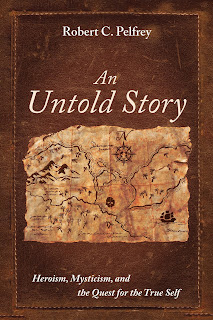
NEW BOOK--An Untold Story: Heroism, Mysticism, and the Quest for the True Self

"There is no greater agony than bearing an untold story inside you." ~ Maya Angelou, I Know Why the Caged Bird Sings About the Boo...